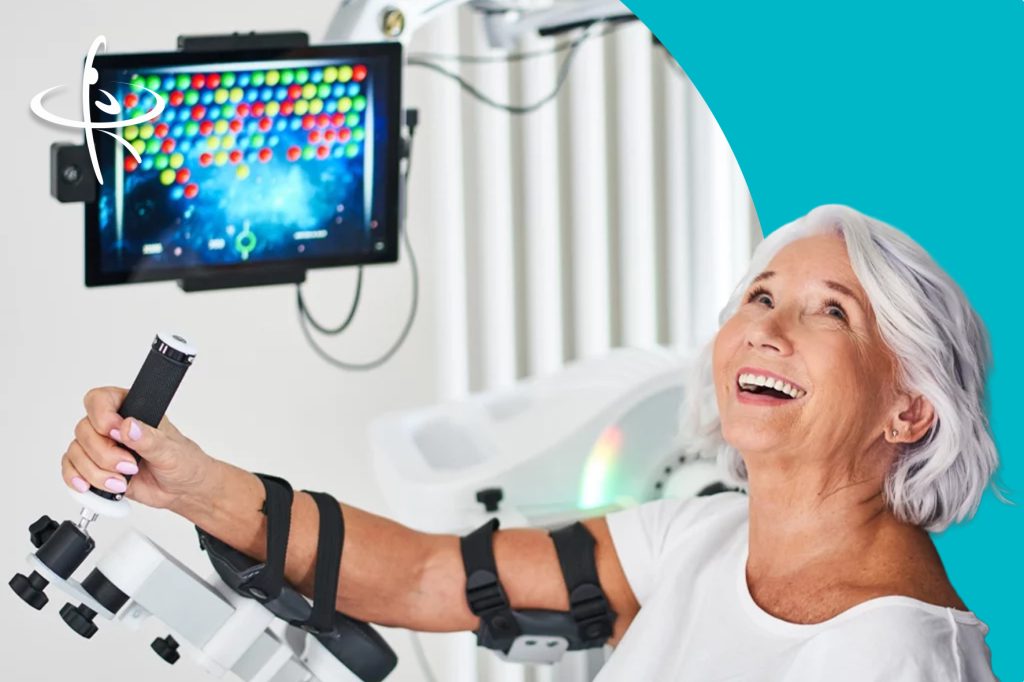
Our robotic rehabilitation system is designed to support neurological and orthopedic rehabilitation for both upper and lower limbs. It integrates electromyography (EMG) sensors that detect even very low-level muscle activity, allowing assisted movement and enabling active training for patients with minimal voluntary strength.
The system can be applied to shoulders, elbows, forearms, ankles, lower extremities, and postural muscles, adapting to individual patient needs. It supports a range of therapeutic exercises including passive movement, EMG-triggered assisted motion, active and resistive exercises, and proprioceptive training to enhance neuromuscular coordination. Interactive software provides biofeedback through games controlled by muscle activity, which helps increase patient engagement and repetition intensity; a key factor in motor learning and functional recovery.
Clinical metrics such as EMG activity, range of motion, muscle strength, and session progression are tracked, and detailed reports can be generated for documentation and therapy planning. This system is applied in neurology, orthopedics, post-stroke rehabilitation, spinal cord injury recovery, and movement disorders. Its EMG-responsive assistance is particularly valuable during early rehabilitation stages when voluntary movement is limited and progressively supports stronger active participation, aligning with principles of neuroplasticity and task-oriented therapy.